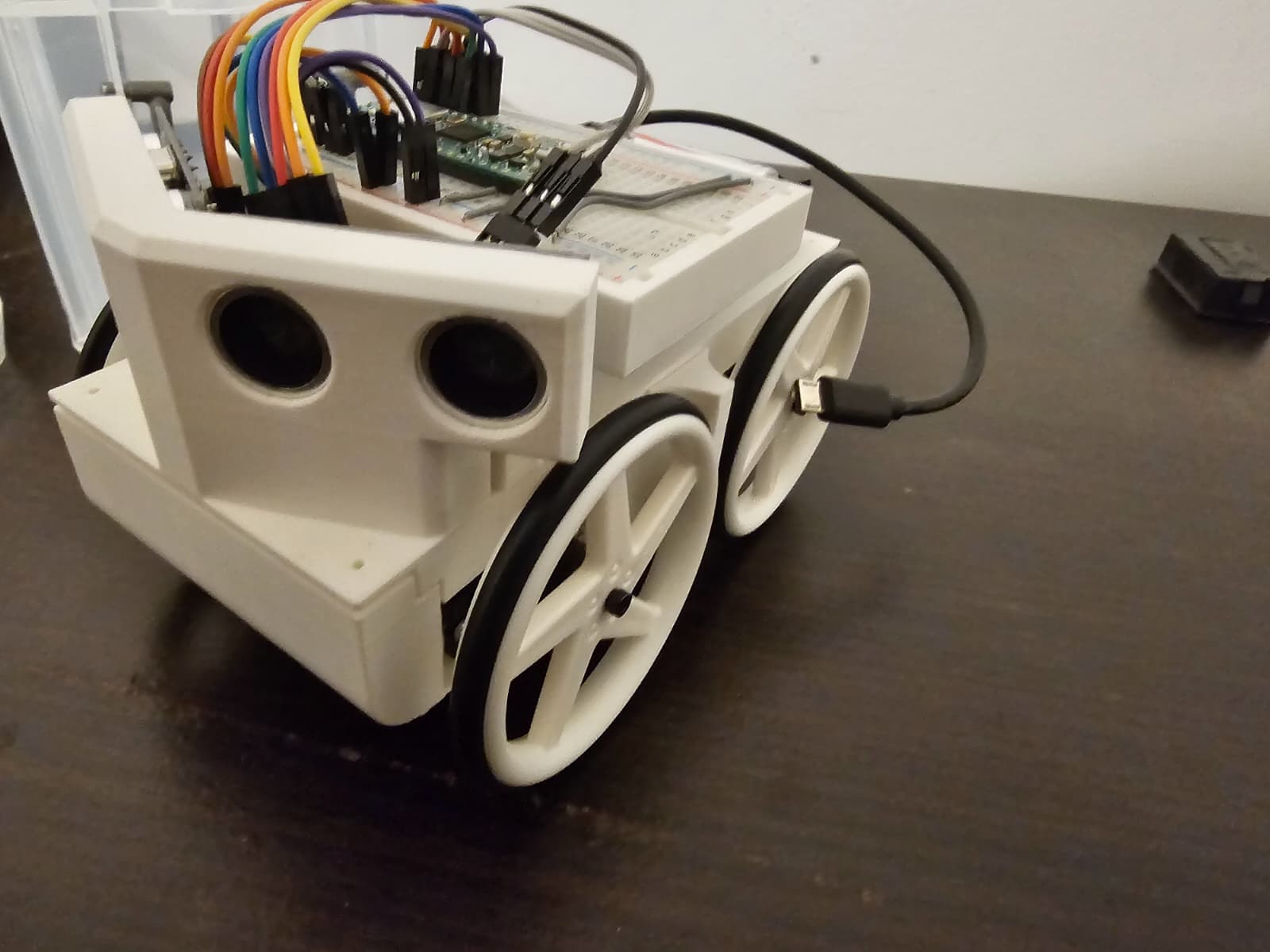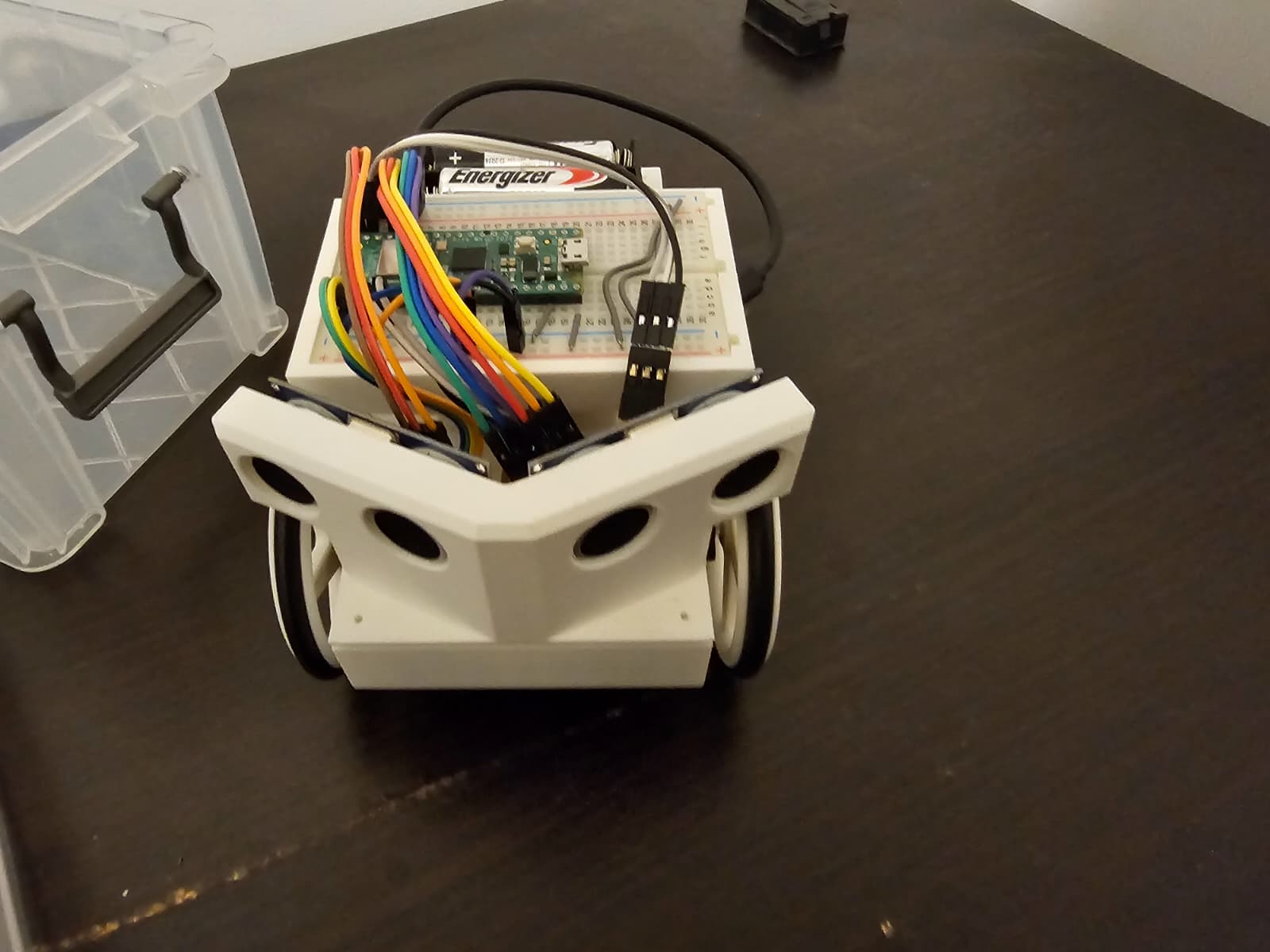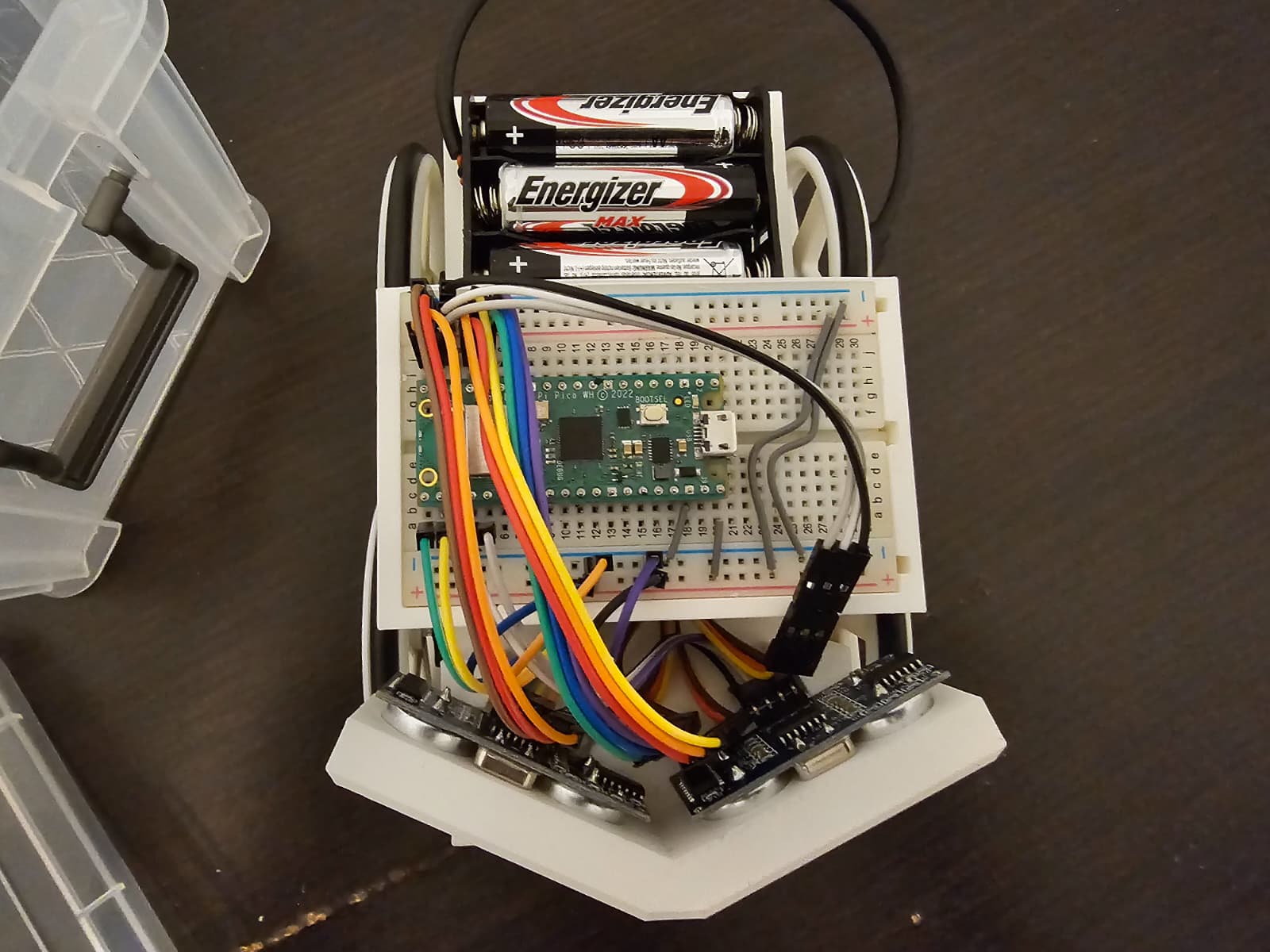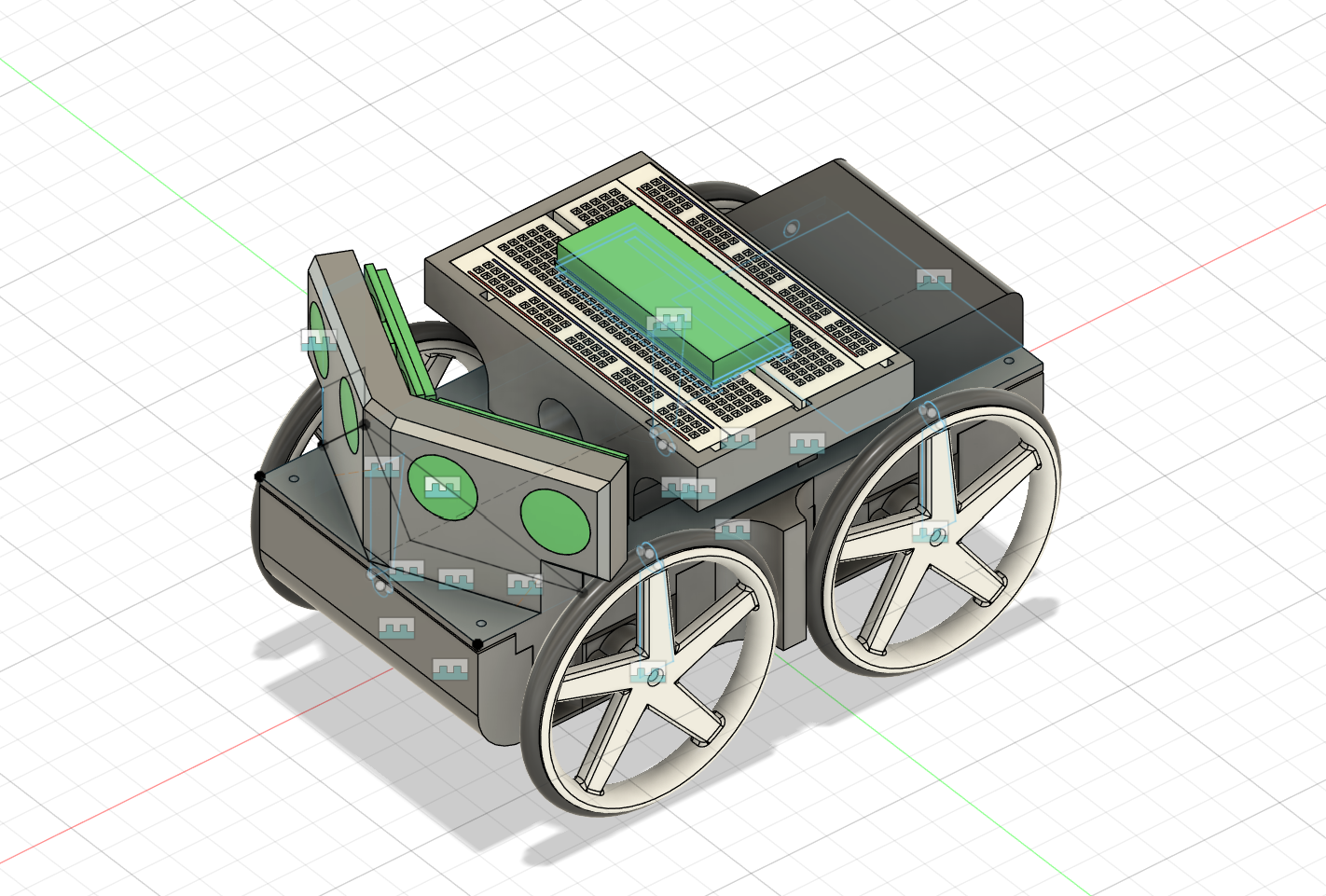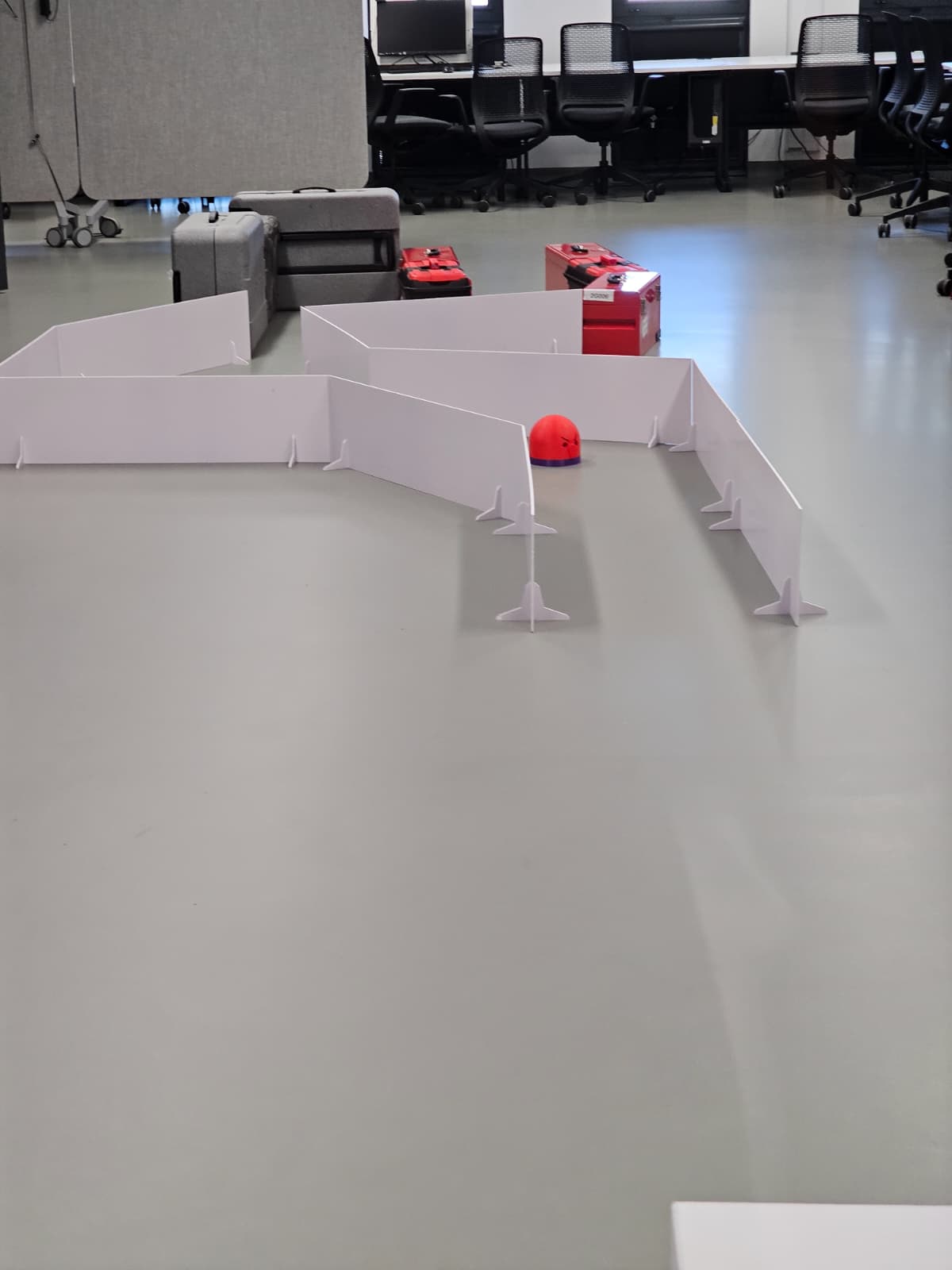
Escape an unknown maze autonomously — a maze that was physically reconfigured every week, so the solution had to generalise rather than memorise.
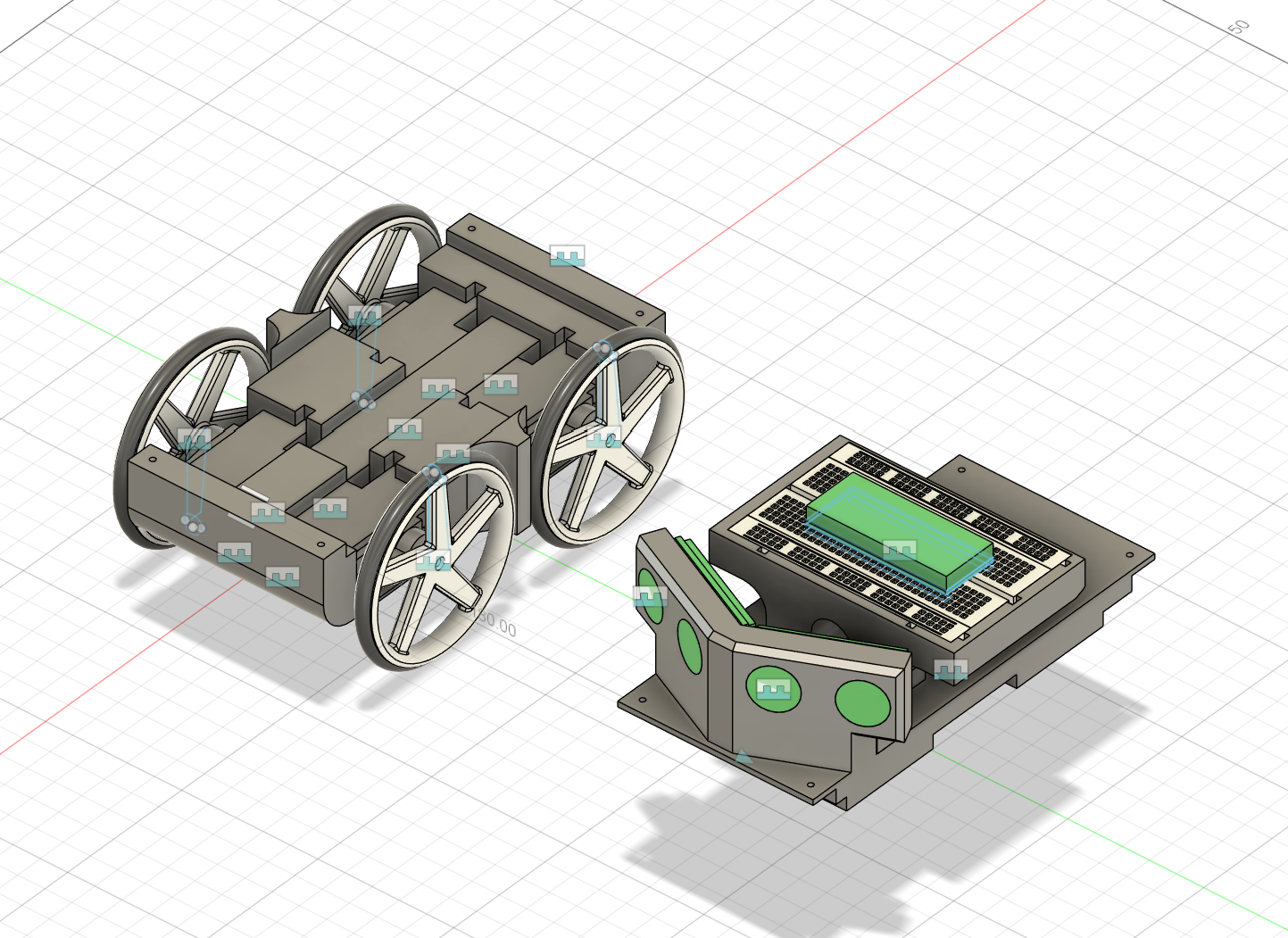
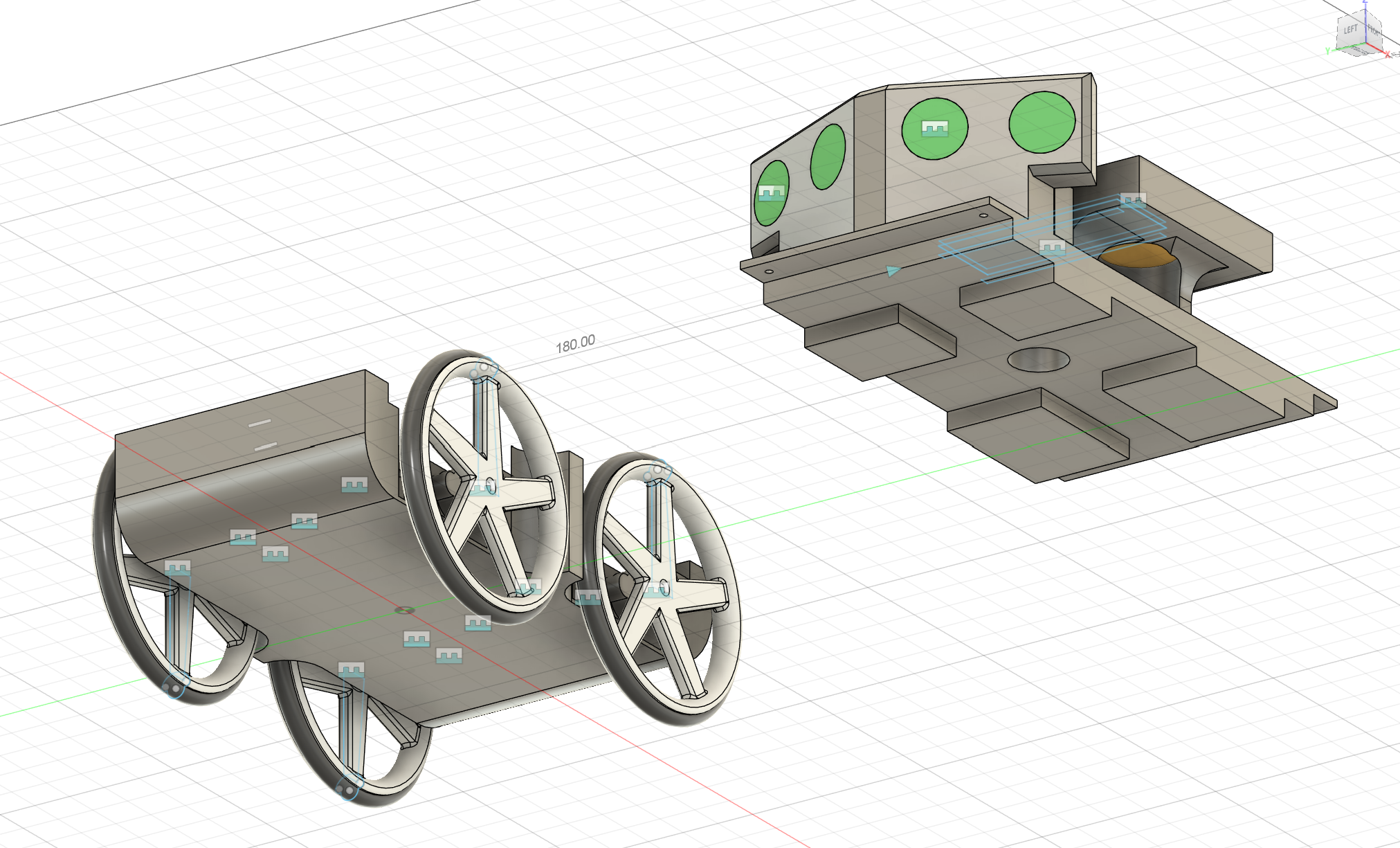
Mechanical design (CAD in Fusion 360), electronics, the wall-following control algorithm and all tuning — designed, built and validated individually.
A wall-following algorithm — a strategy borrowed from how ants and insects negotiate obstacles, and a classic of maze robotics. The robot keeps a wall on one side and traces it; for a maze whose exit connects to the outer boundary, following the wall guarantees an exit regardless of layout.
Robust autonomy does not always require a neural network or excessive compute — it requires an algorithm matched honestly to the sensing you actually have.
Hardware–software co-design under tight constraints; translating maze-solving theory into reliable real-time behaviour; building compact mechanical and electronic systems that survive repeated runs.