Autonomous Maze Navigation — Senithu Dampegama
SYS-03 / FLAGSHIP SOLO COURSEWORK SYSTEM AUTONOMOUS NAVIGATION 2025

AUTONOMOUS MAZE
NAVIGATION.

The maze changed every week. The robot had two ultrasonic sensors, a strict size limit, and no room for clever compute. It escaped on every attempt — proof that robust autonomy is an algorithm-and-geometry problem before it is a compute problem.

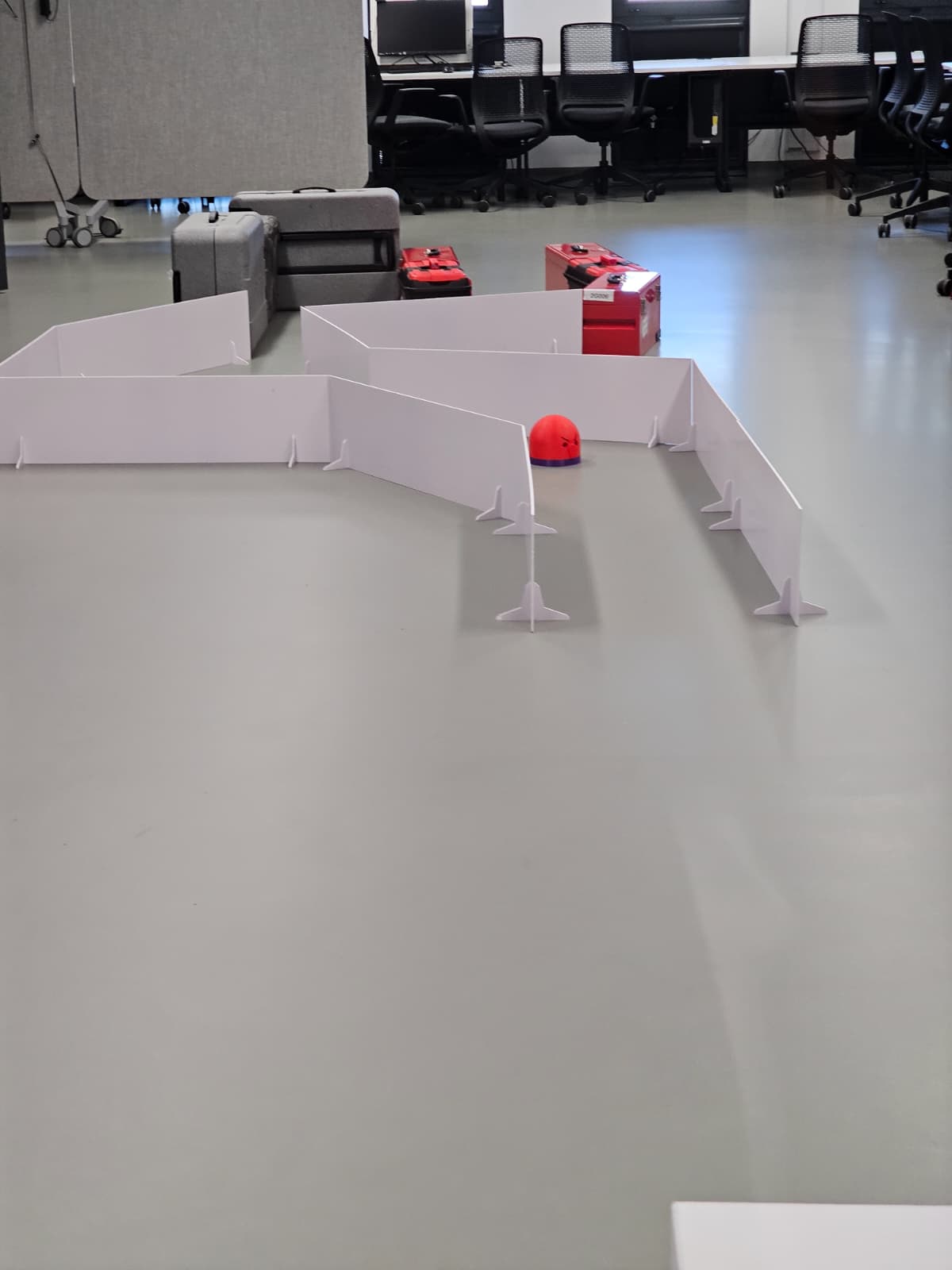
The physical test maze built from reconfigurable white wall panels in the robotics lab
THE ACTUAL MAZE — MODULAR WALLS, REBUILT WEEKLY
SENSING
2× ULTRASONIC — NOTHING ELSE
GEOMETRY
FIXED 25° MOUNT ANGLES
ALGORITHM
WALL FOLLOWING — REAL TIME
RESULT
ESCAPED — EVERY ATTEMPT
TECHNICAL DOSSIER AFSM / MAZE ROBOT
01 — MISSION

Escape an unknown maze autonomously — a maze that was physically reconfigured every week, so the solution had to generalise rather than memorise.

02 — CONSTRAINTS
FOOTPRINTThe robot had to fit a strict maximum box — forcing a compact, lightweight mechanical design.
SENSINGExactly two ultrasonic sensors, mounted at fixed 25° angles. No camera, no LiDAR, no encoders.
COMPUTEThe control algorithm had to be simple enough to run reliably in real time on modest embedded hardware.
ENVIRONMENTWeekly reconfiguration ruled out any mapping, memorisation or hard-coded route.
03 — MY OWNERSHIP
SOLO — UNIVERSITY ROBOTICS COURSEWORK, 2025

Mechanical design (CAD in Fusion 360), electronics, the wall-following control algorithm and all tuning — designed, built and validated individually.

04 — METHOD

A wall-following algorithm — a strategy borrowed from how ants and insects negotiate obstacles, and a classic of maze robotics. The robot keeps a wall on one side and traces it; for a maze whose exit connects to the outer boundary, following the wall guarantees an exit regardless of layout.

WHY 25° MATTERSEach angled cone reads forward range and lateral wall distance at once — one sensor pair covers approach, clearance and corner detection without a scanner.
WALL TOO CLOSESteer away — proportional correction from the near-side range.
WALL DRIFTING AWAYSteer back toward it — the followed wall is never released.
WALL AHEADBoth cones close up — turn away from the followed side until the path clears.
OPENING DETECTEDNear-side range jumps — turn into the gap and reacquire the wall.
05 — WHAT IT PROVES

Robust autonomy does not always require a neural network or excessive compute — it requires an algorithm matched honestly to the sensing you actually have.

Hardware–software co-design under tight constraints; translating maze-solving theory into reliable real-time behaviour; building compact mechanical and electronic systems that survive repeated runs.
06 — PHYSICAL BUILD NO DEMO VIDEO EXISTS — CAD, PHOTOGRAPHY AND DIAGRAMS ONLY
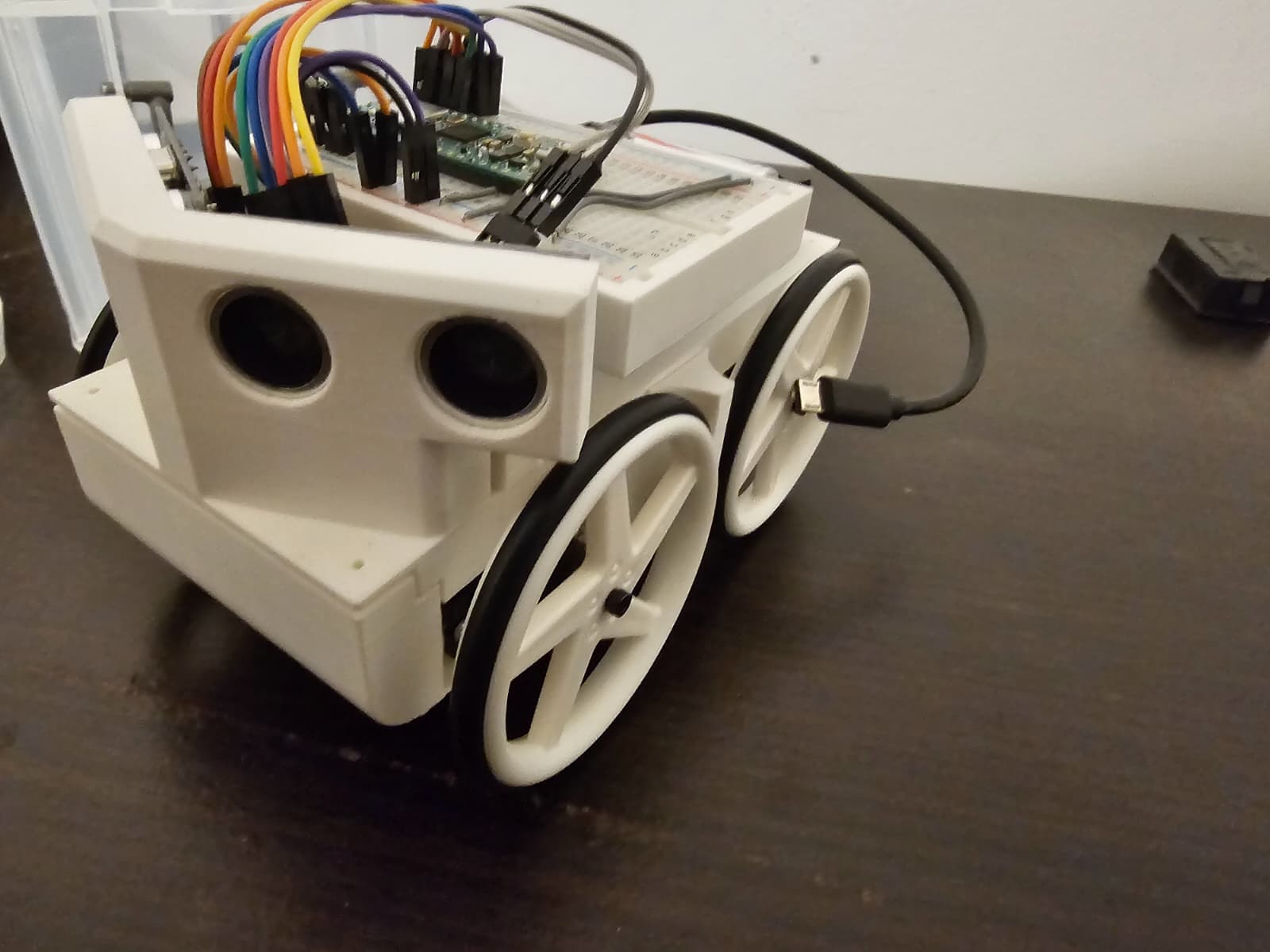
Front of the maze robot showing the two ultrasonic sensors angled at 25 degrees
THE 25° SENSOR PODS — THE WHOLE PERCEPTION SYSTEM
Maze robot front view showing angled sensor pods and drive wheels
FRONT ELEVATION — COMPACT ENVELOPE
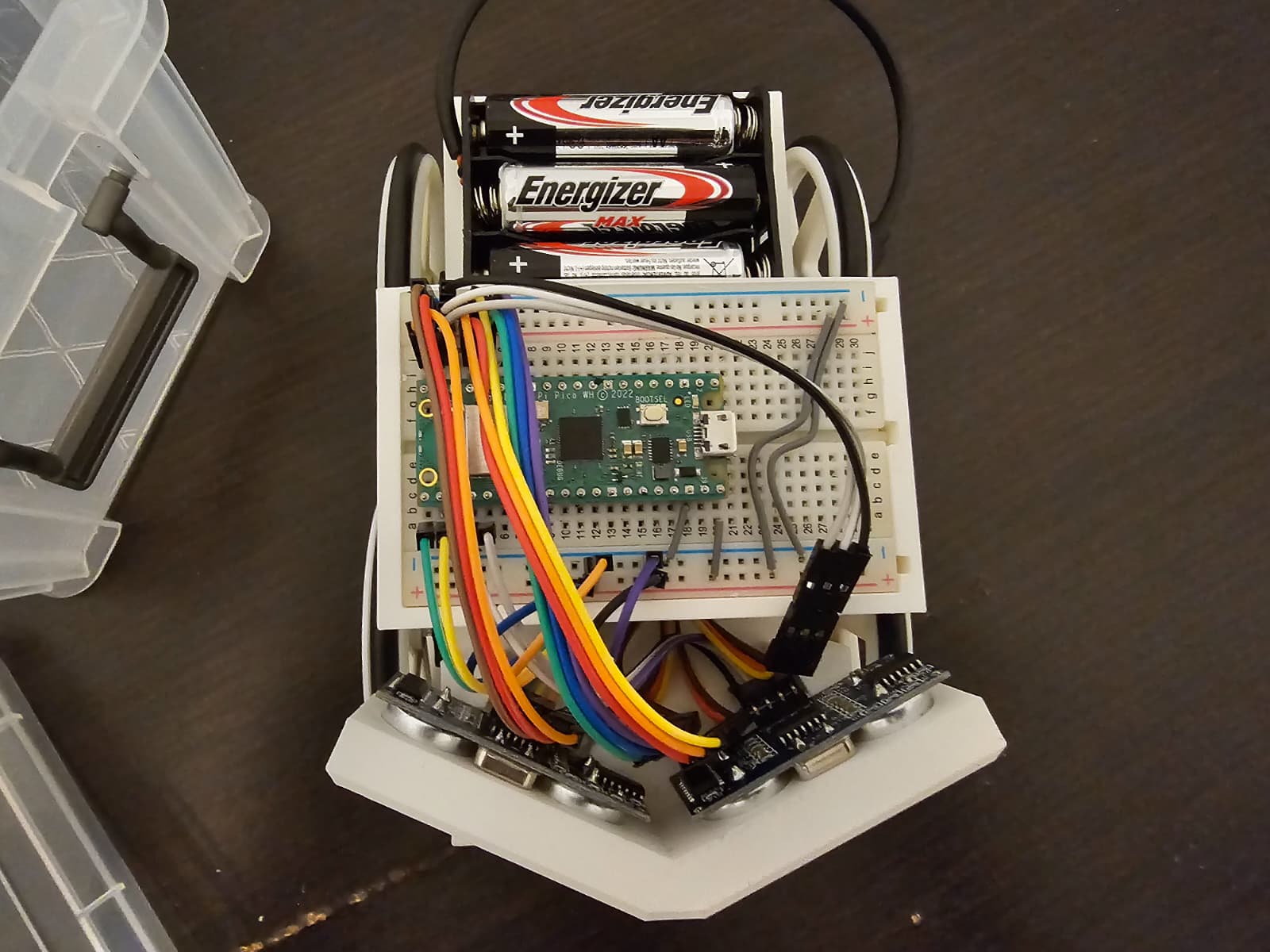
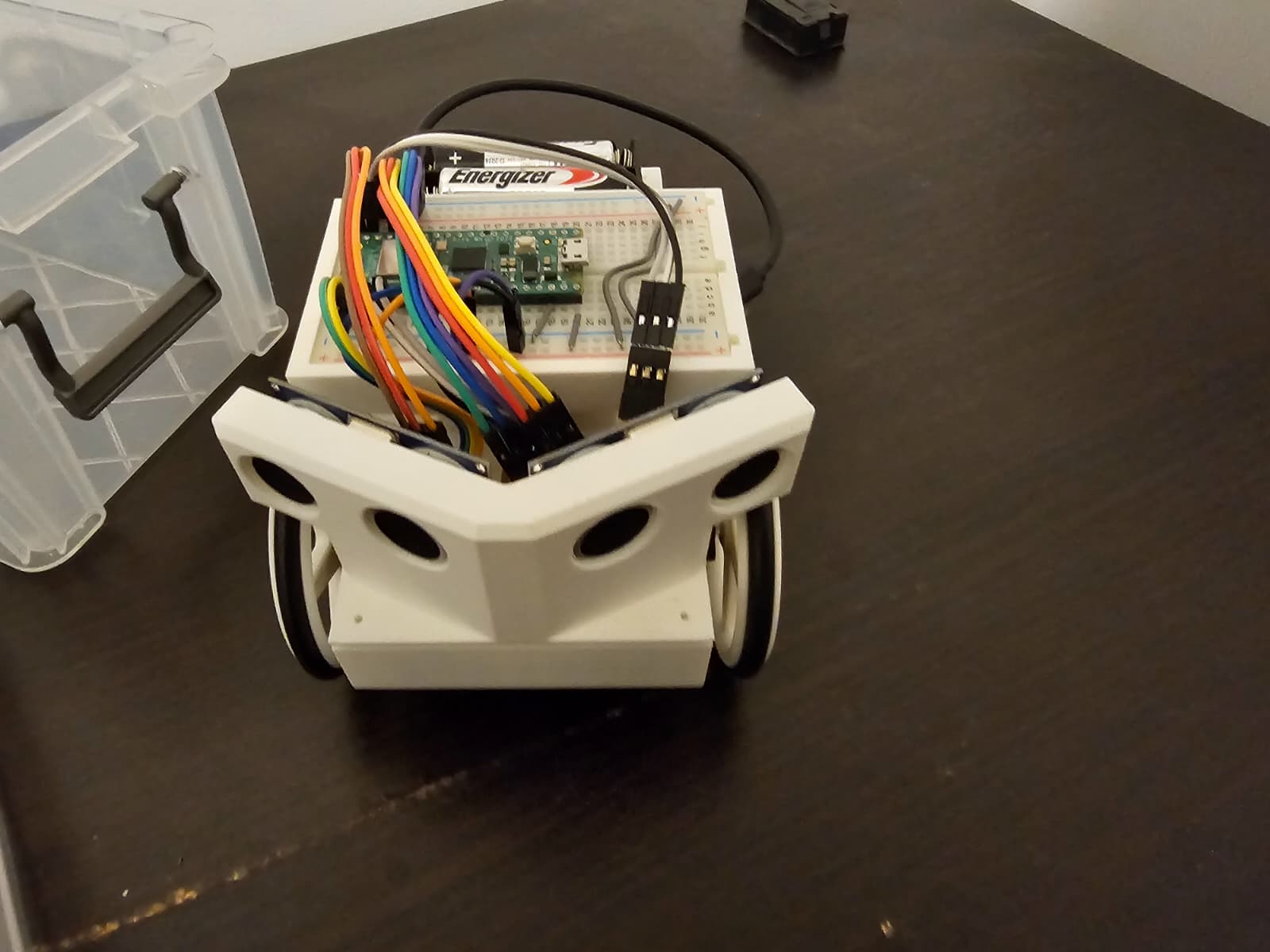
Top view of the maze robot showing Pico, breadboard and wiring
TOP DECK — PICO + SENSOR WIRING
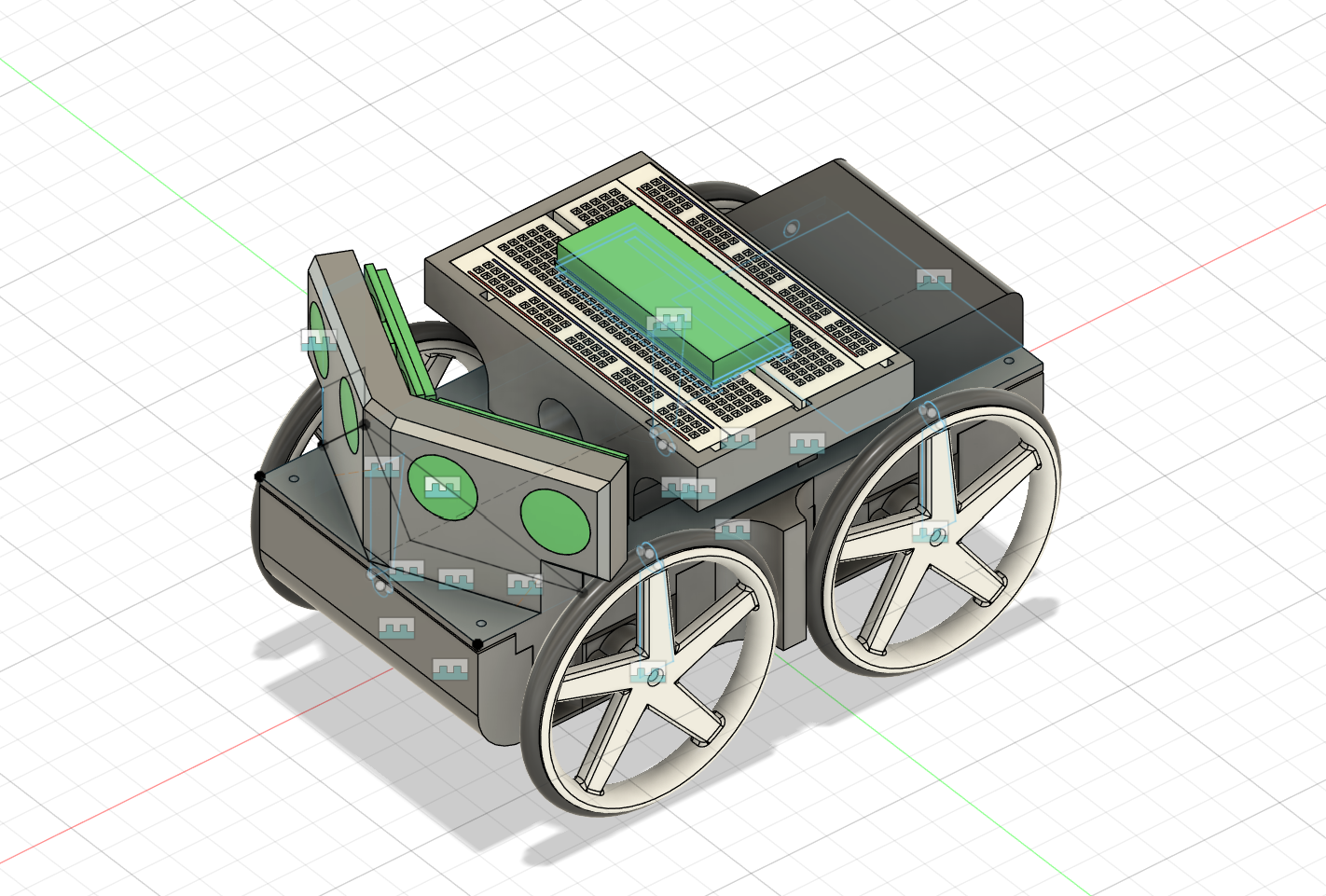
Fusion 360 CAD model of the complete maze robot
CAD — FULL ASSEMBLY, FUSION 360
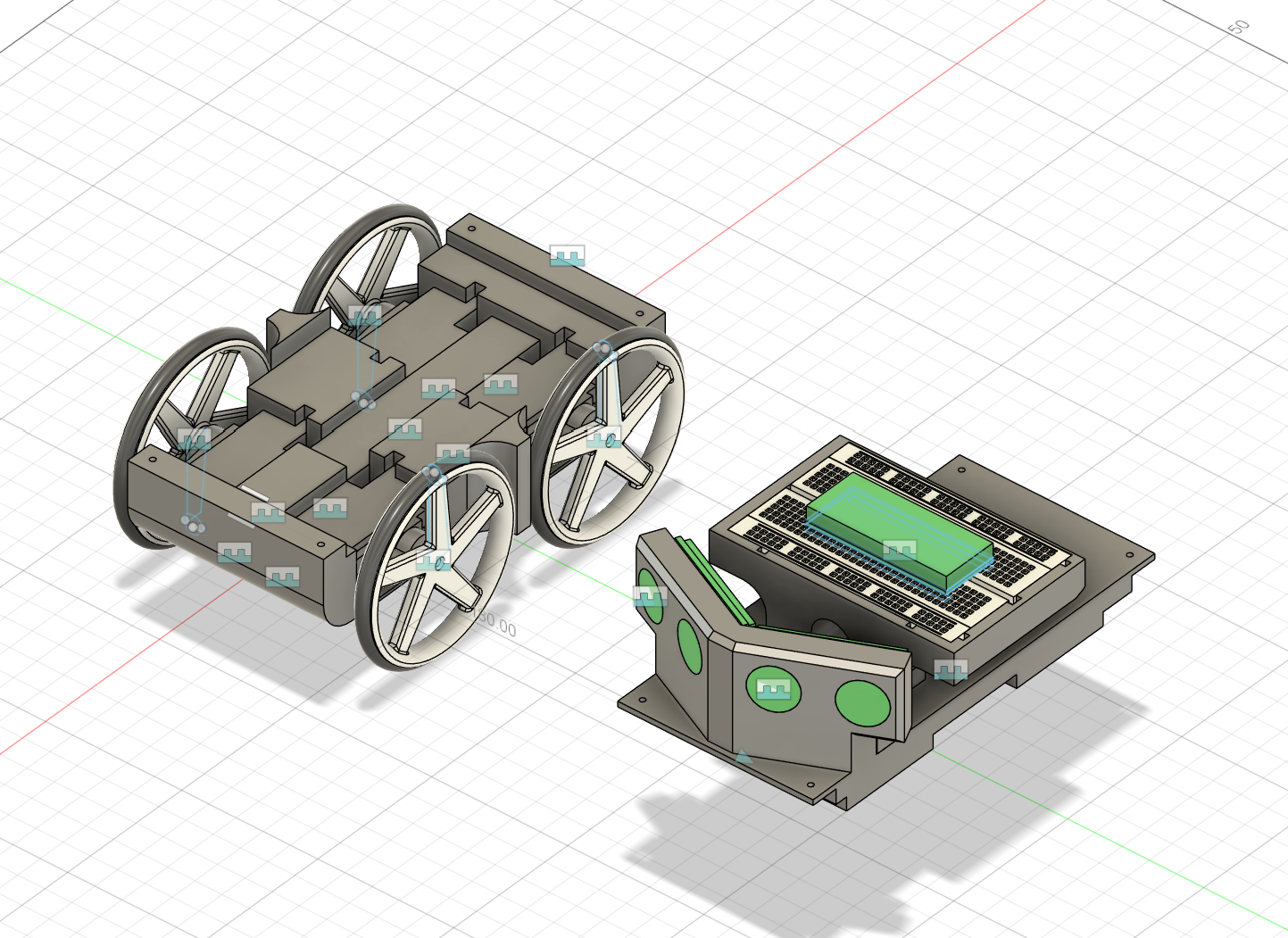
CAD model showing chassis and sensor mount as separate parts
CAD — CHASSIS + SENSOR MOUNT, SEPARATED
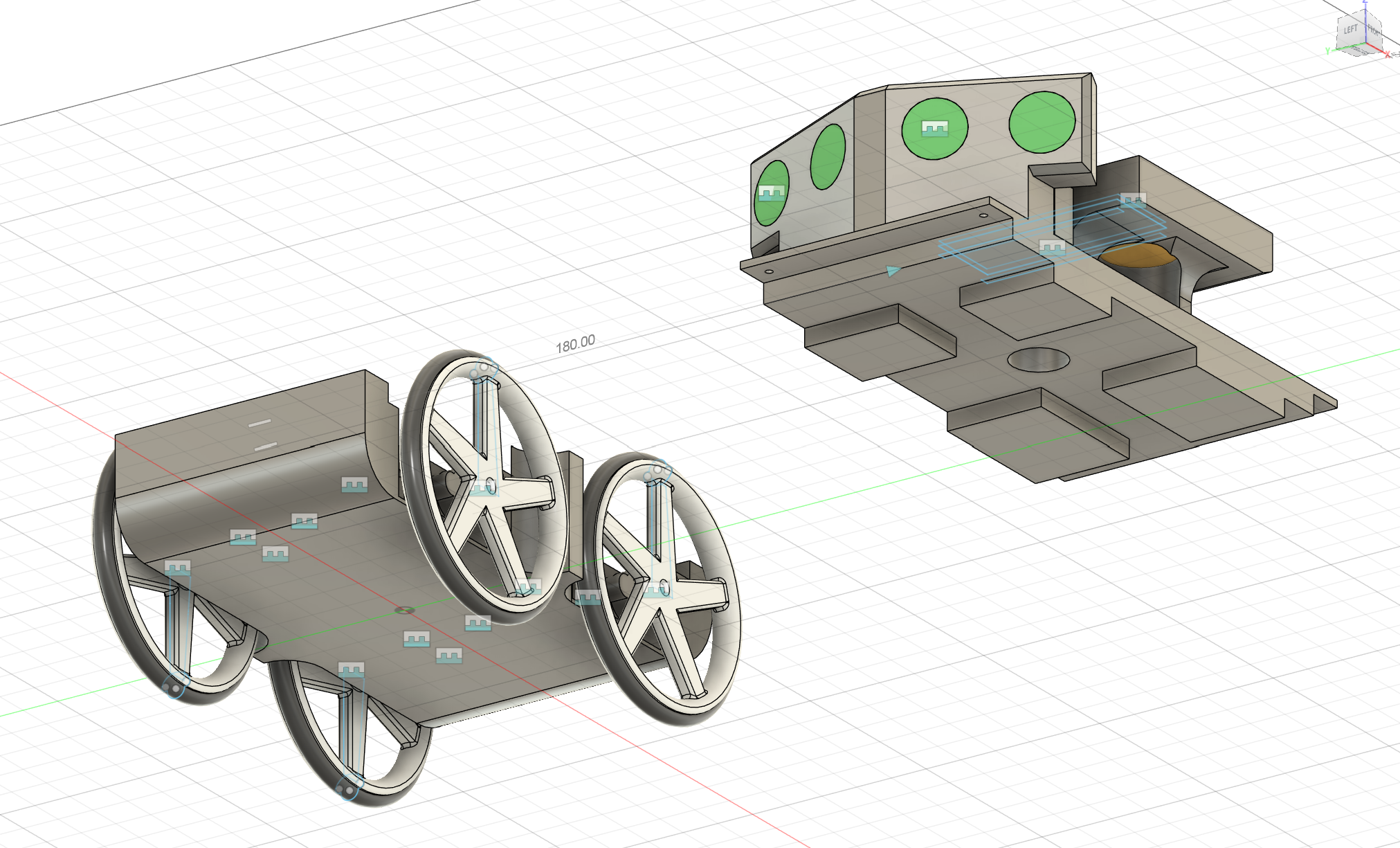
CAD detail of the angled sensor mount plate
CAD — 25° MOUNT GEOMETRY DETAIL
07 — OUTCOME

The robot escaped the maze on every attempt, across every weekly reconfiguration. The algorithm never needed to know the layout — only how to keep a wall beside it.

08 — NEXT REVISION
Wheel odometry to detect and escape loop traps in non-simply-connected mazes
Filtered ranging (median-of-N) for noisy ultrasonic returns